How pashm becomes a finished Kashmiri shawl.

Fibre, yarn, loom and needle. Many hands and a few simple tools carry a shawl from raw pashm to the finished piece.

In the workshop

Embroiderers at work, a weaver at the loom, and the thread that feeds them both.

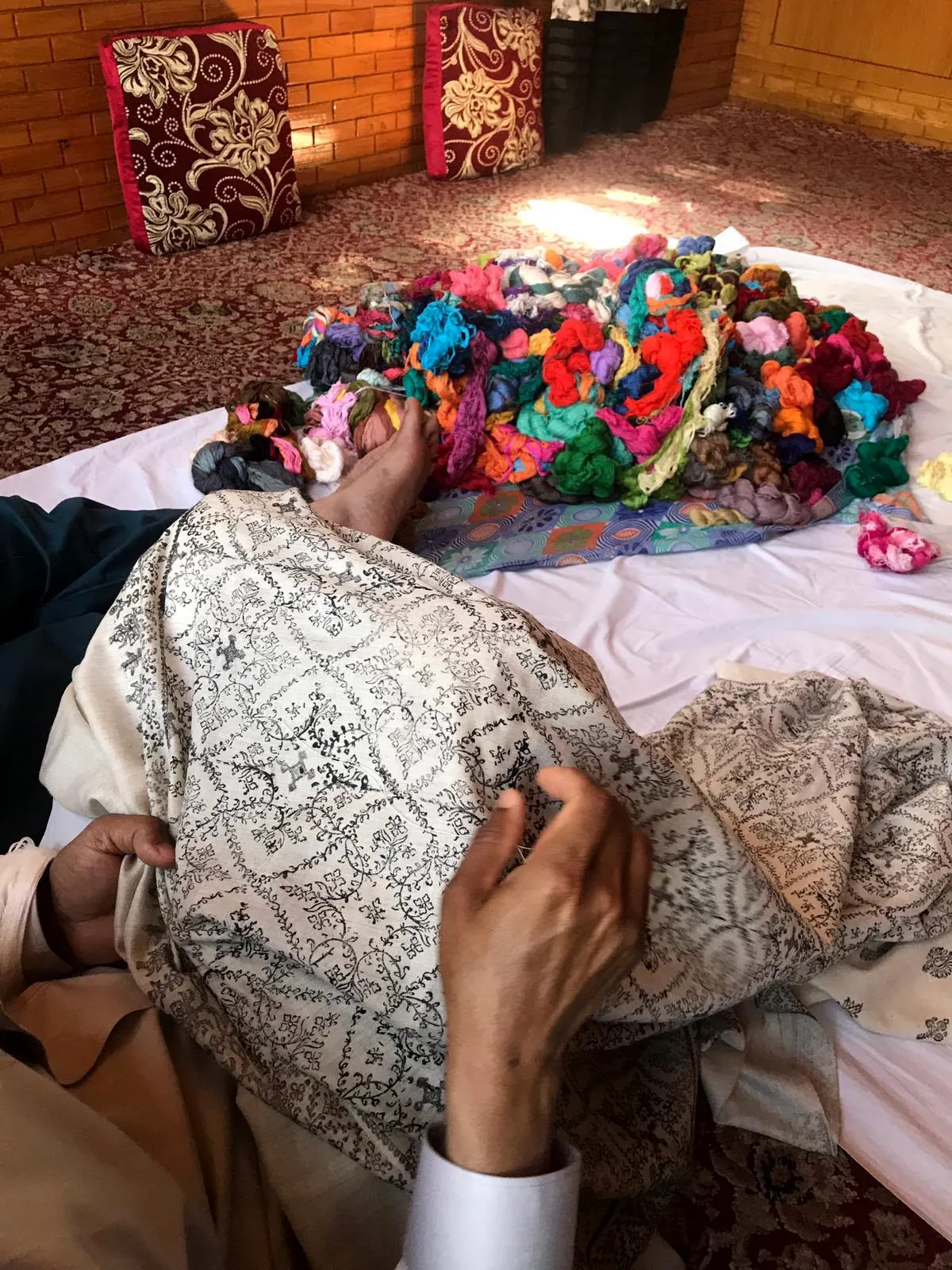
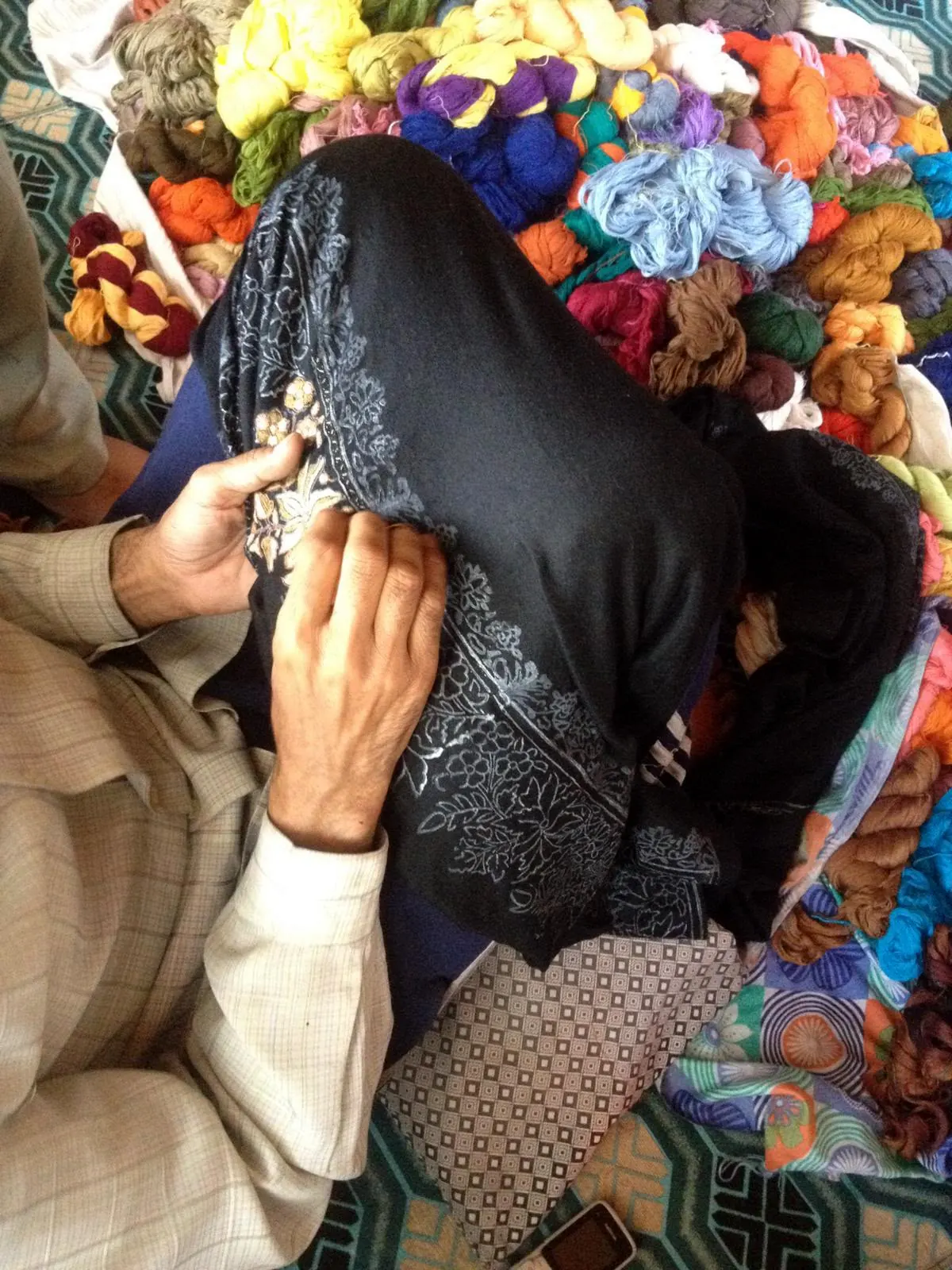
Hands pulling a thread through a printed pattern on an ivory shawl, a heap of coloured yarn behind.
Stitch by stitch
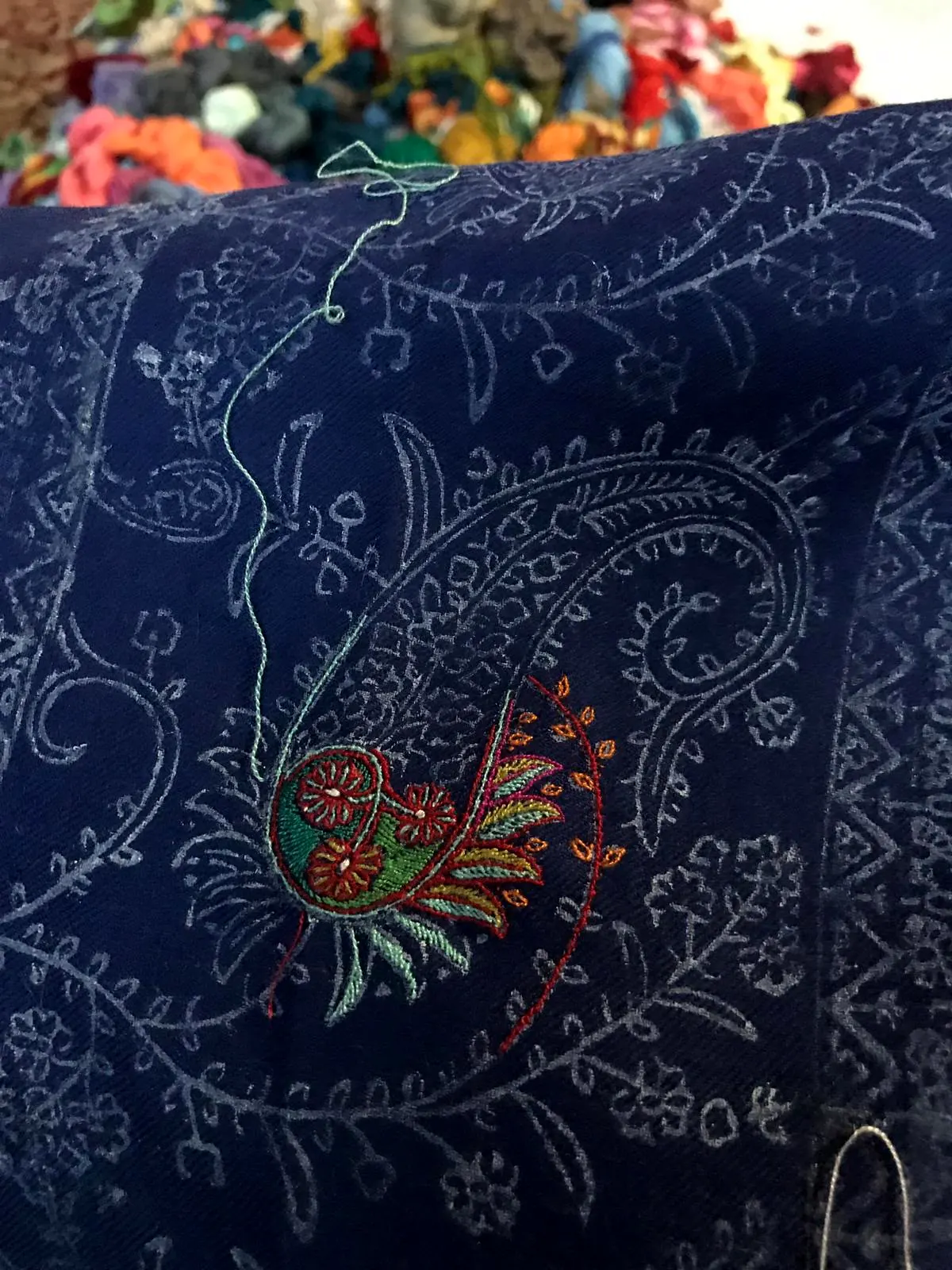
A navy shawl printed with a paisley outline, one corner already filled in with coloured needlework.
A printed outline, partly filled
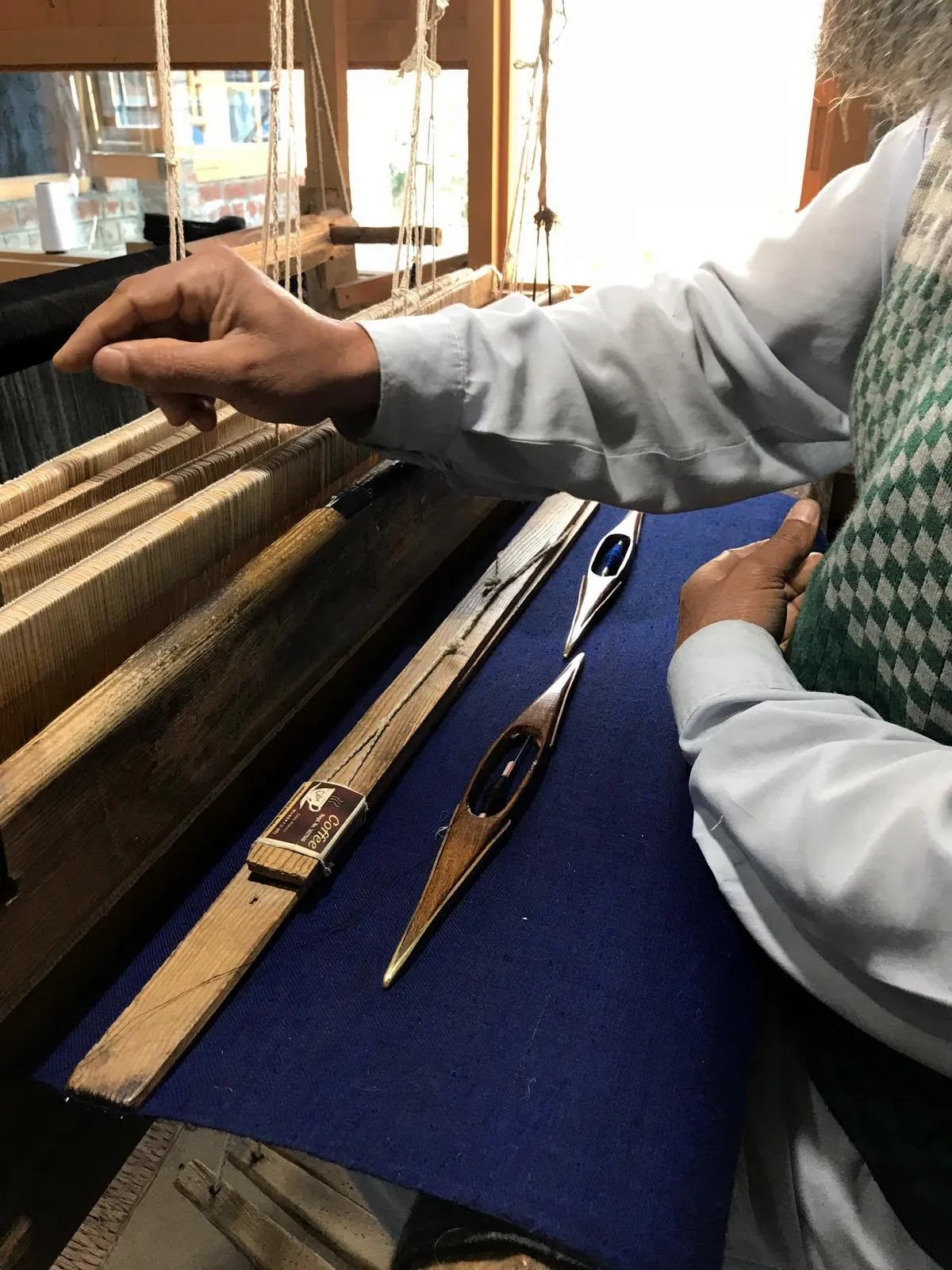
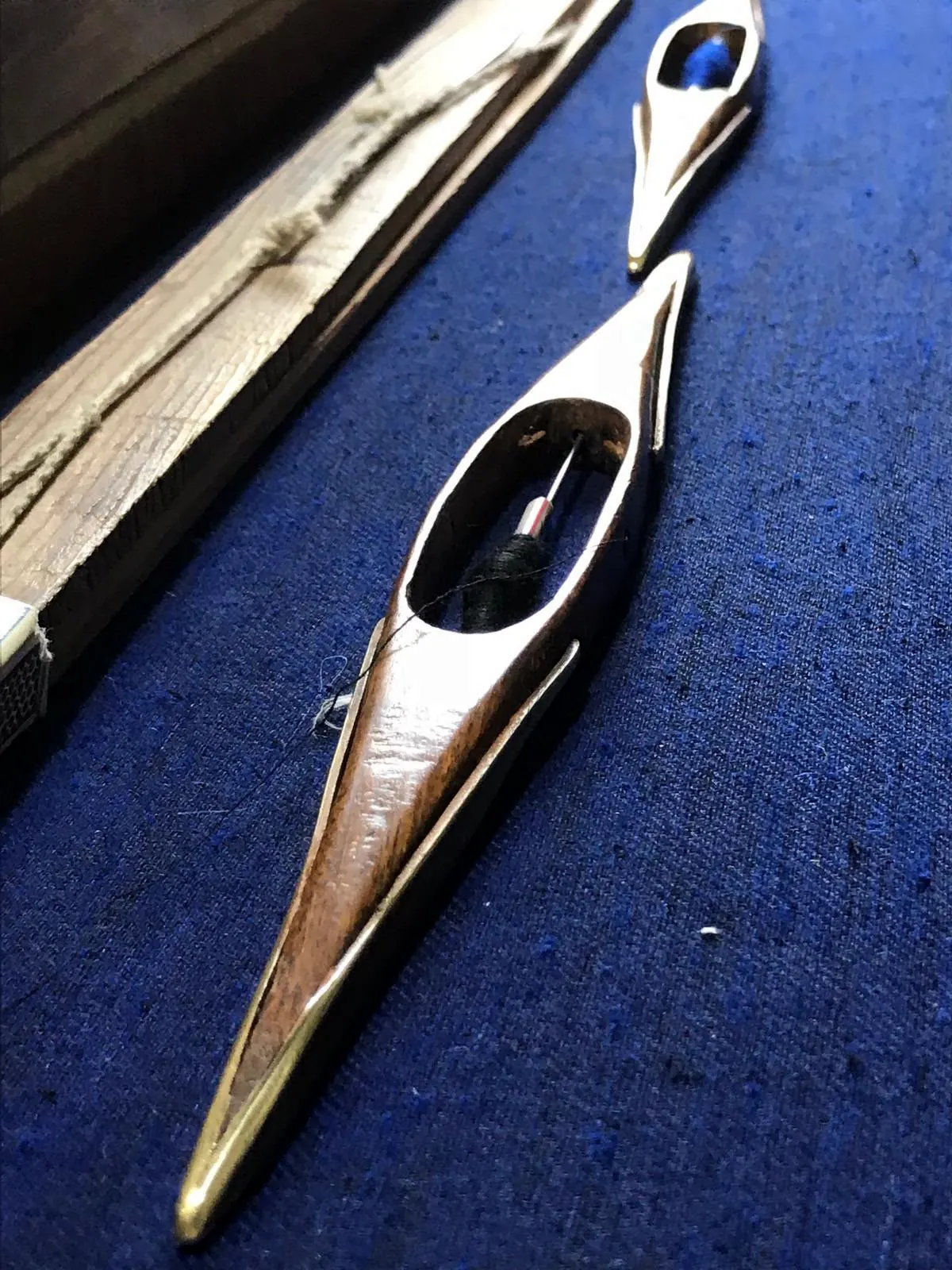
A weaver's hands on a wooden loom, two shuttles lying on the dark blue cloth.
At the handloom
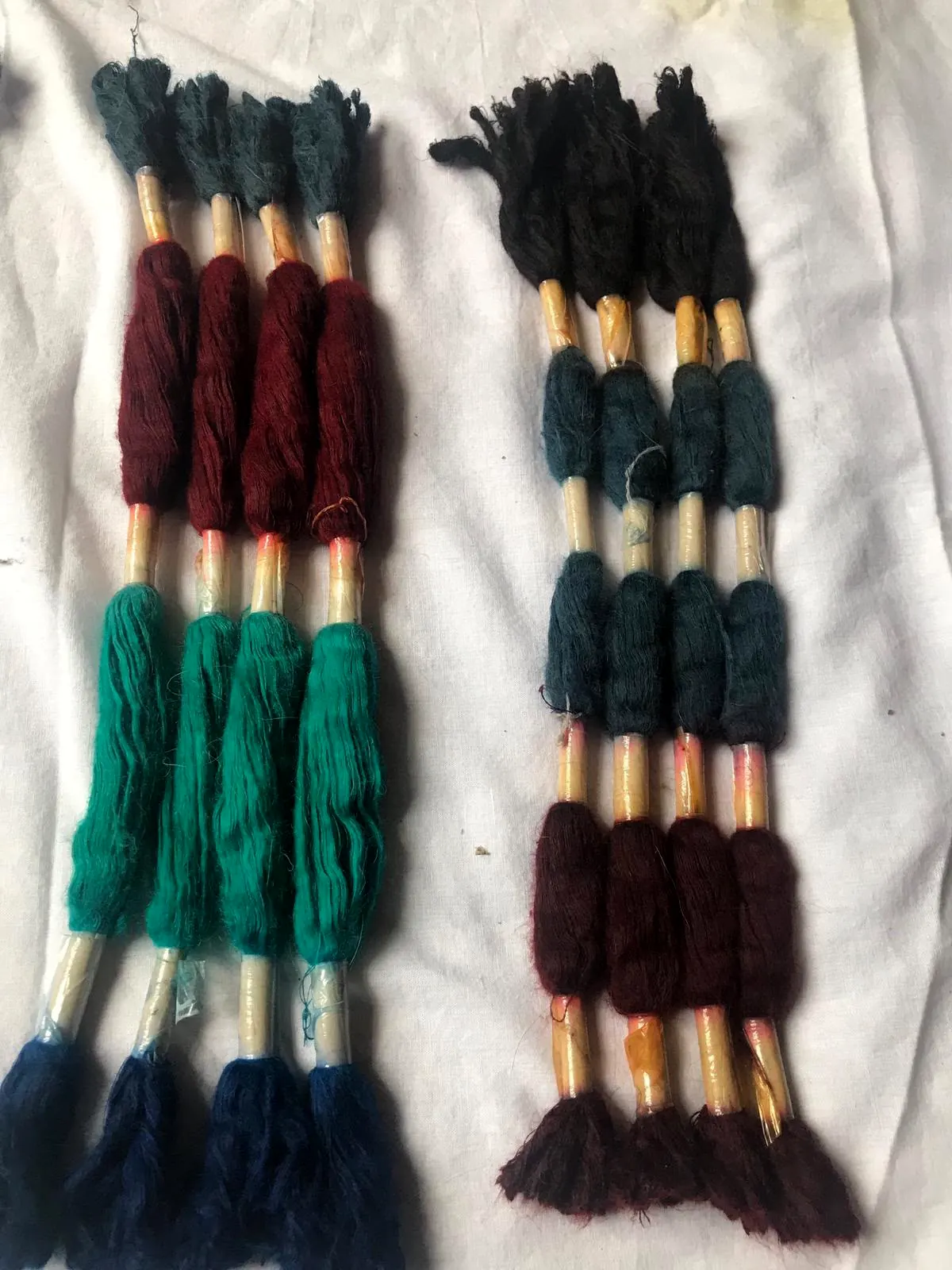
Skeins of teal, green, maroon and navy thread tied in bundles on a white cloth.
Thread tied in skeins
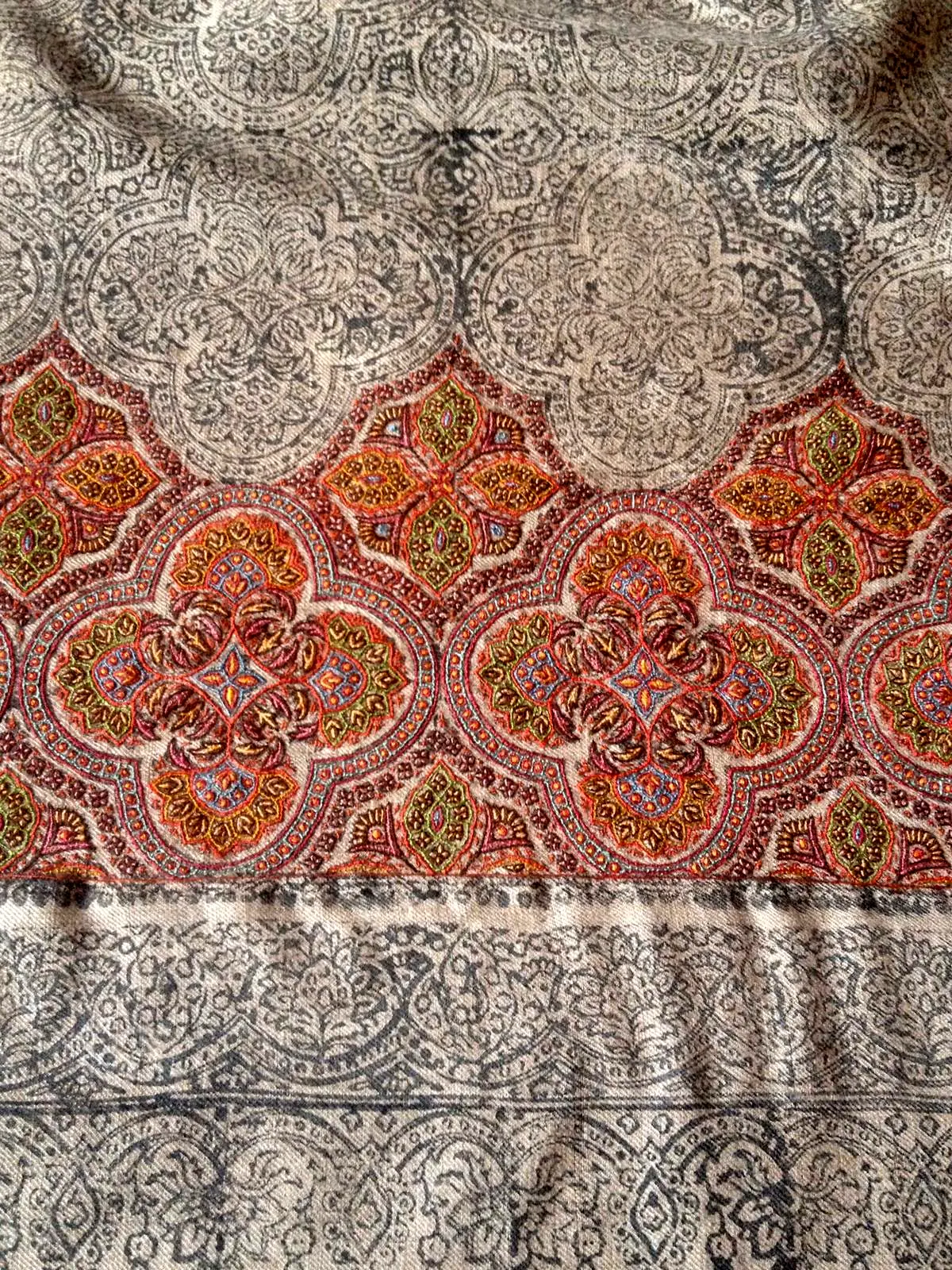
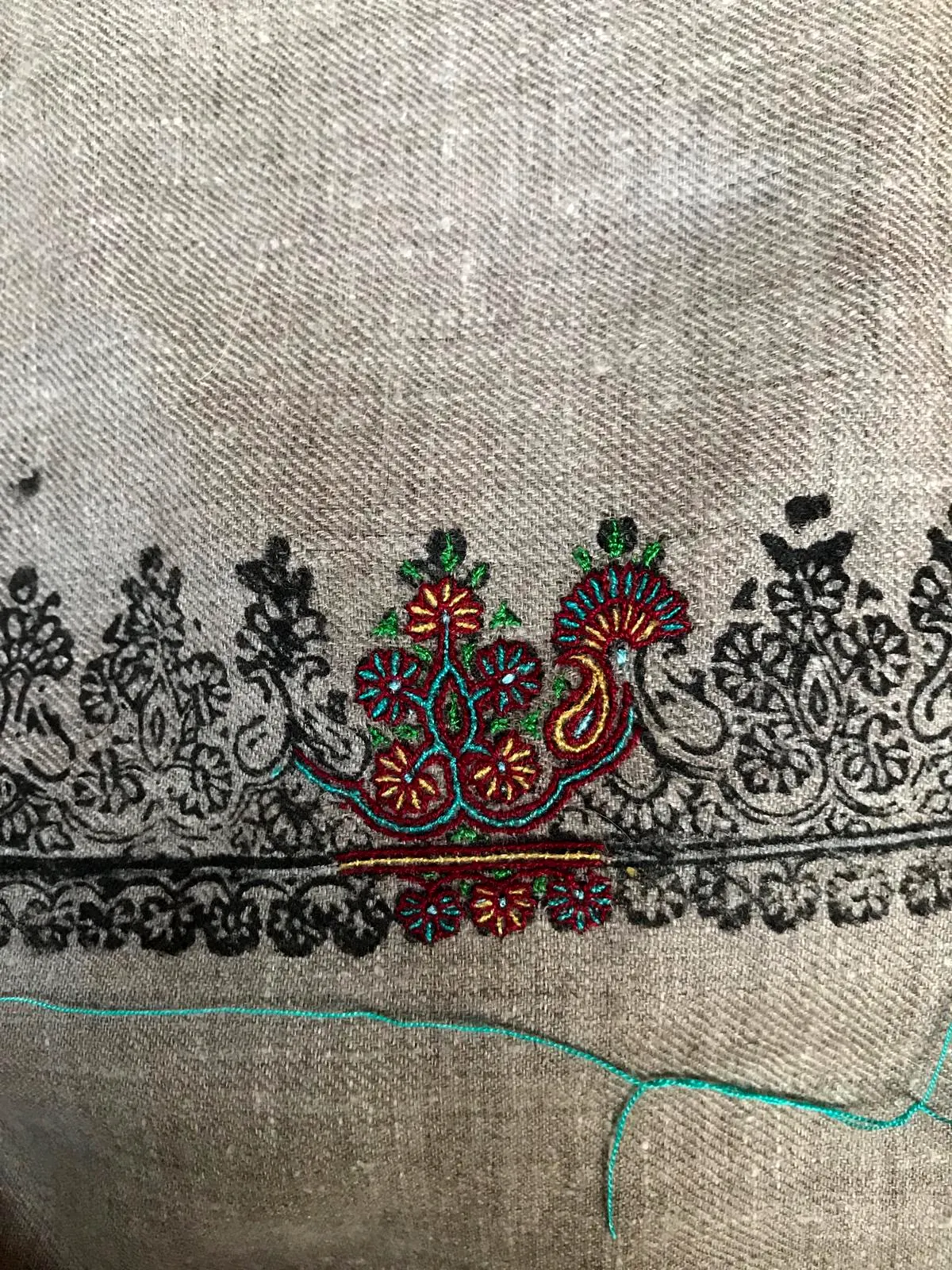
A shawl border half embroidered in coral and ochre, the rest still showing the printed outline.
A border half worked
A wooden shuttle resting on dark blue cloth on the loom.
Shuttle on the loom
An embroiderer working ivory needlework into a black shawl, surrounded by coloured yarn.
Ivory sozni on black
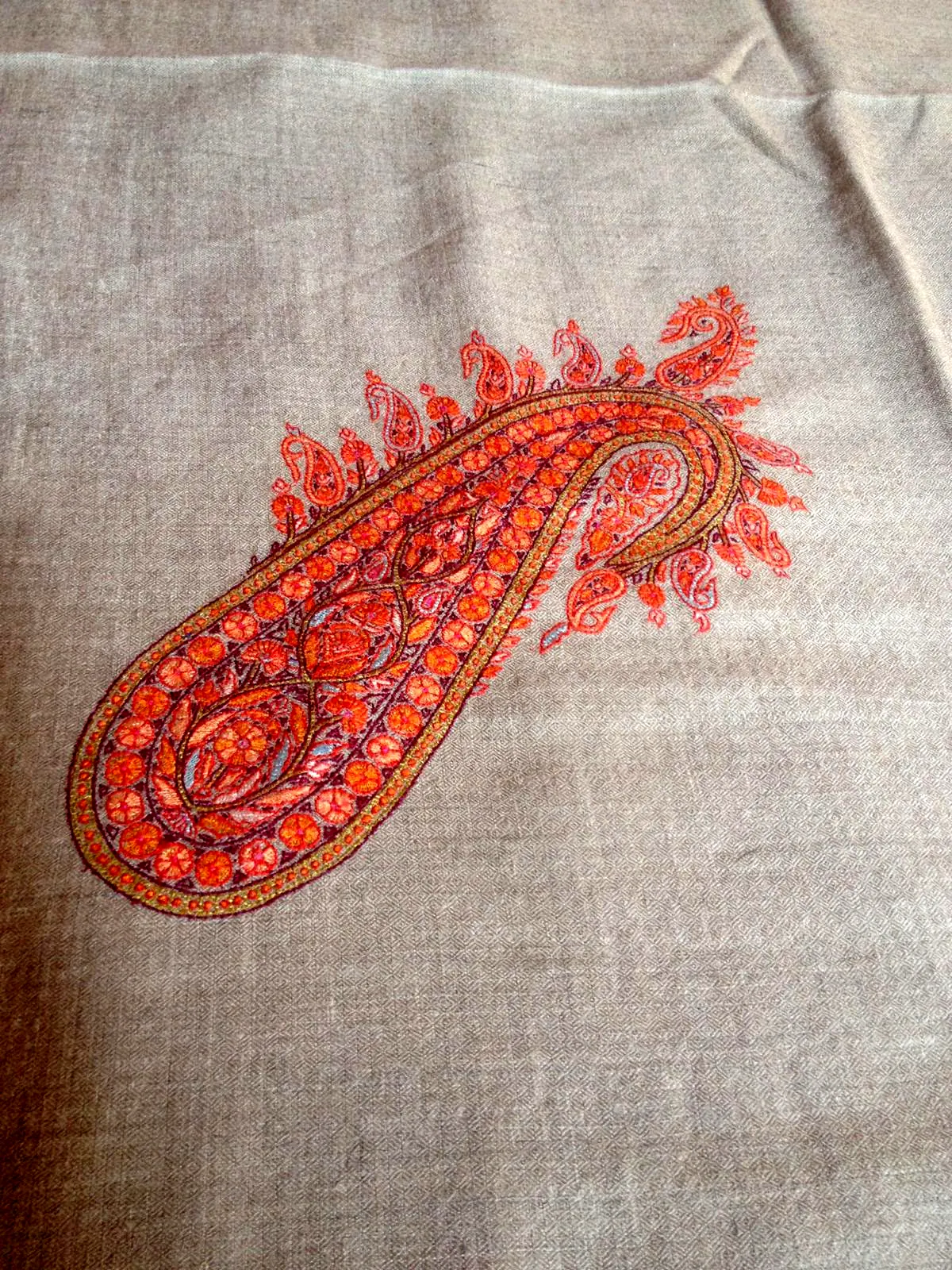
A single orange and red paisley embroidered on plain grey pashmina.
A finished paisley
A coloured motif embroidered into a black printed border on grey pashmina.
A motif set into a printed border
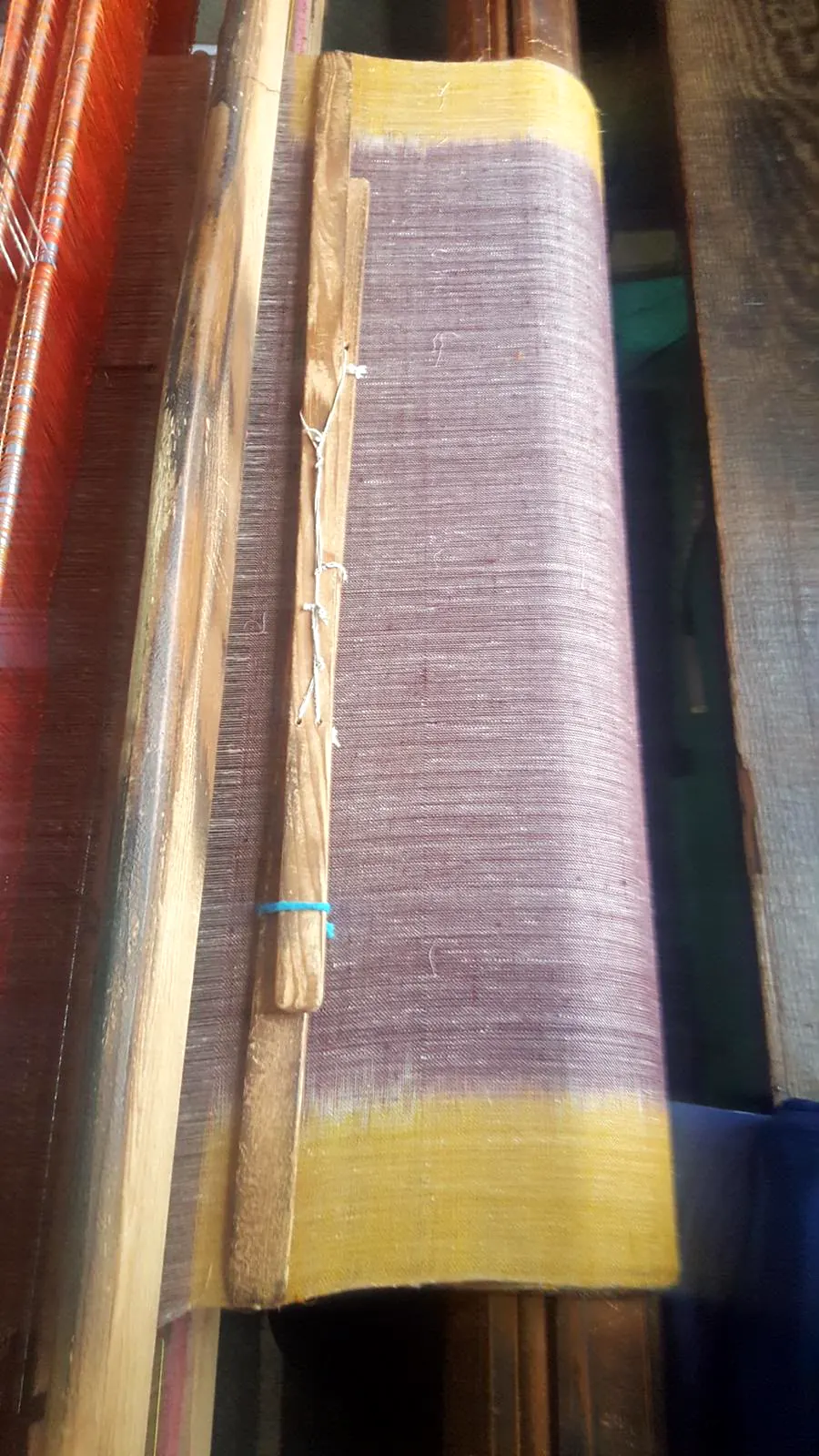
Woven lavender cloth wound on the loom's beam, a yellow band at the edge.
Cloth wound on the beam
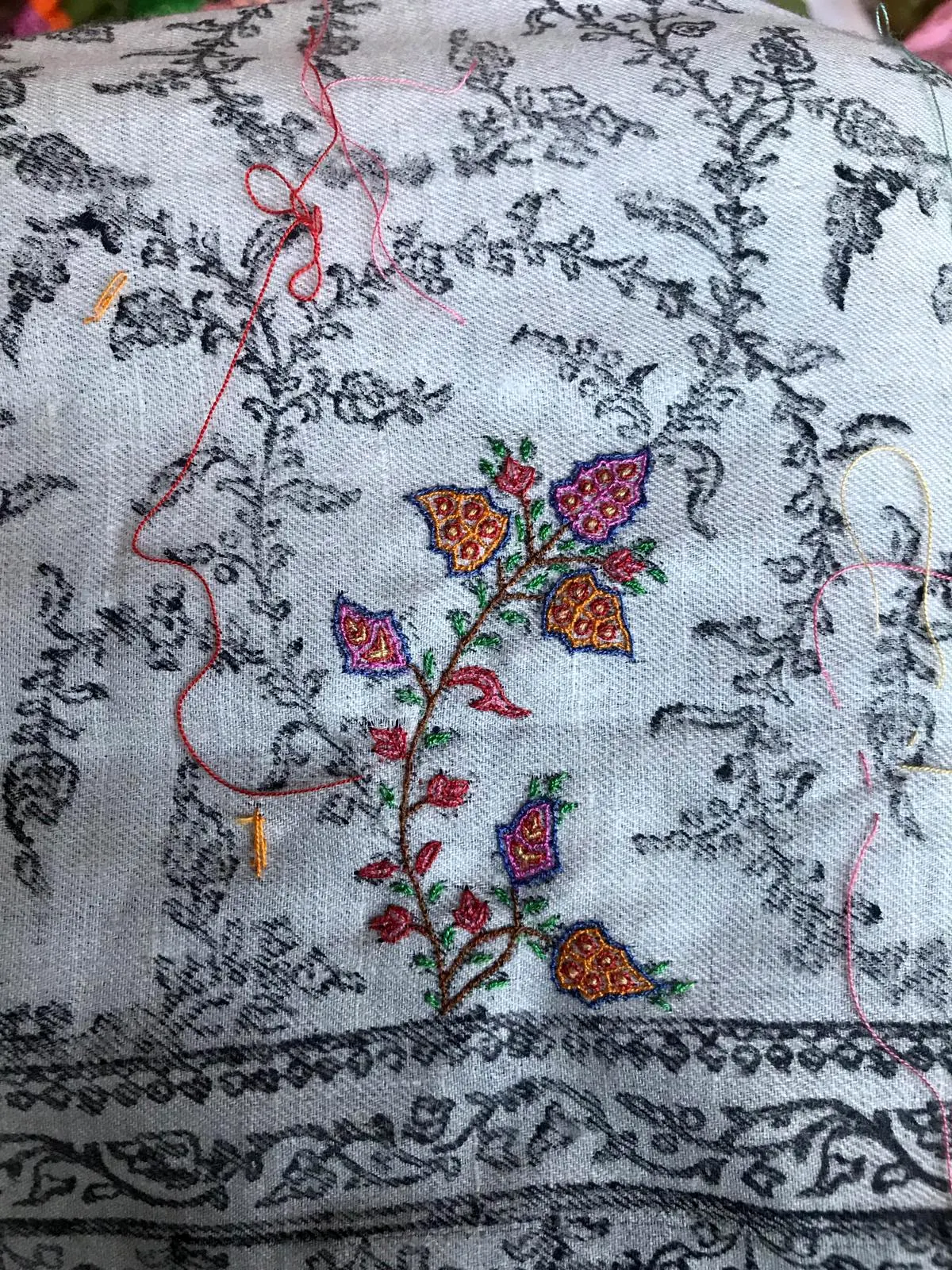
A grey printed pattern on ivory cloth, with a few flowers already embroidered in colour and threads left hanging.
Colour going into a printed jaal
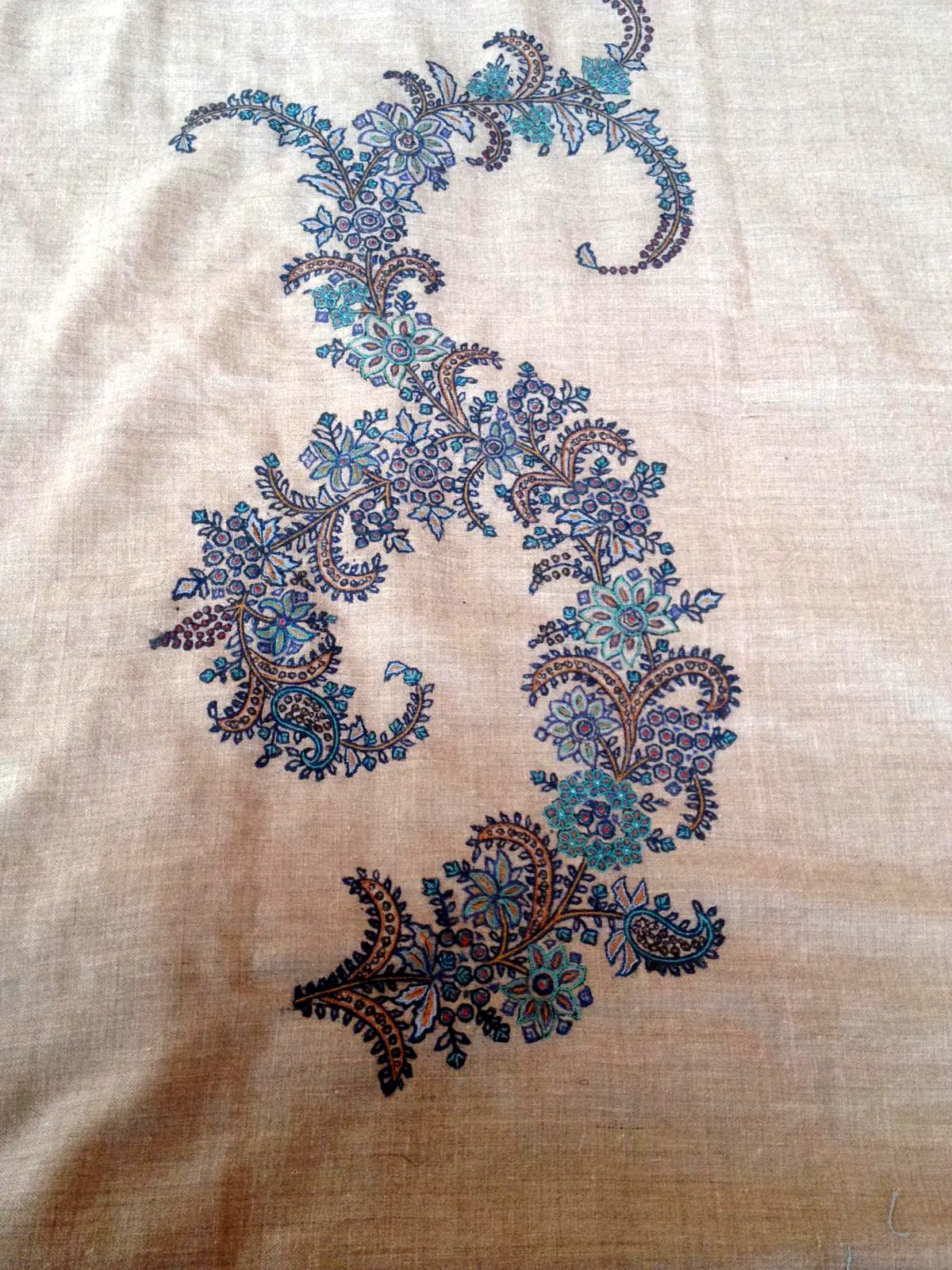
A curling vine of blue and teal needlework on plain beige pashmina.
A vine in blue and teal

The journey of a shawl

The usual route from fibre to finished cloth. The details change from piece to piece.

  1. Collecting the fibre

    Pashm is gathered from the fine undercoat of pashmina-producing goats during seasonal shedding. The coarse outer hair and fine down are still mixed at this point.

  2. Cleaning & sorting

    The raw fibre is opened and sorted so coarse hair, dust, and plant matter can be separated from the fine down prepared for spinning.

  3. Hand spinning

    A spinner draws the cleaned fibre into yarn and controls its twist by touch. A yinder is one traditional hand-operated wheel associated with this work.

  4. Dyeing

    Yarn may be dyed before weaving or before it is used for surface work. Colour preparation depends on the intended textile and the practice of the makers involved.

  5. Weaving

    Warp and weft are brought together on a handloom. In Kani tapestry weaving, small kanis carry coloured wefts while a talim guides the pattern sequence.

  6. Surface embroidery

    When embroidery is part of the textile, it is worked after the base cloth is woven. Sozni uses a fine needle to build surface motifs that may include the curved boteh form.

  7. Washing & finishing

    The cloth is washed, dried, and finished according to the textile and local practice. A purzgar is a specialist associated with cleaning and refining the woven surface.

  8. Final inspection

    The finished textile is opened and checked across its surface and edges. Any further correction depends on the object, its condition, and the standards of the makers involved.

Four techniques

Woven pattern, needlework, pattern across the whole cloth, and the fibre itself.

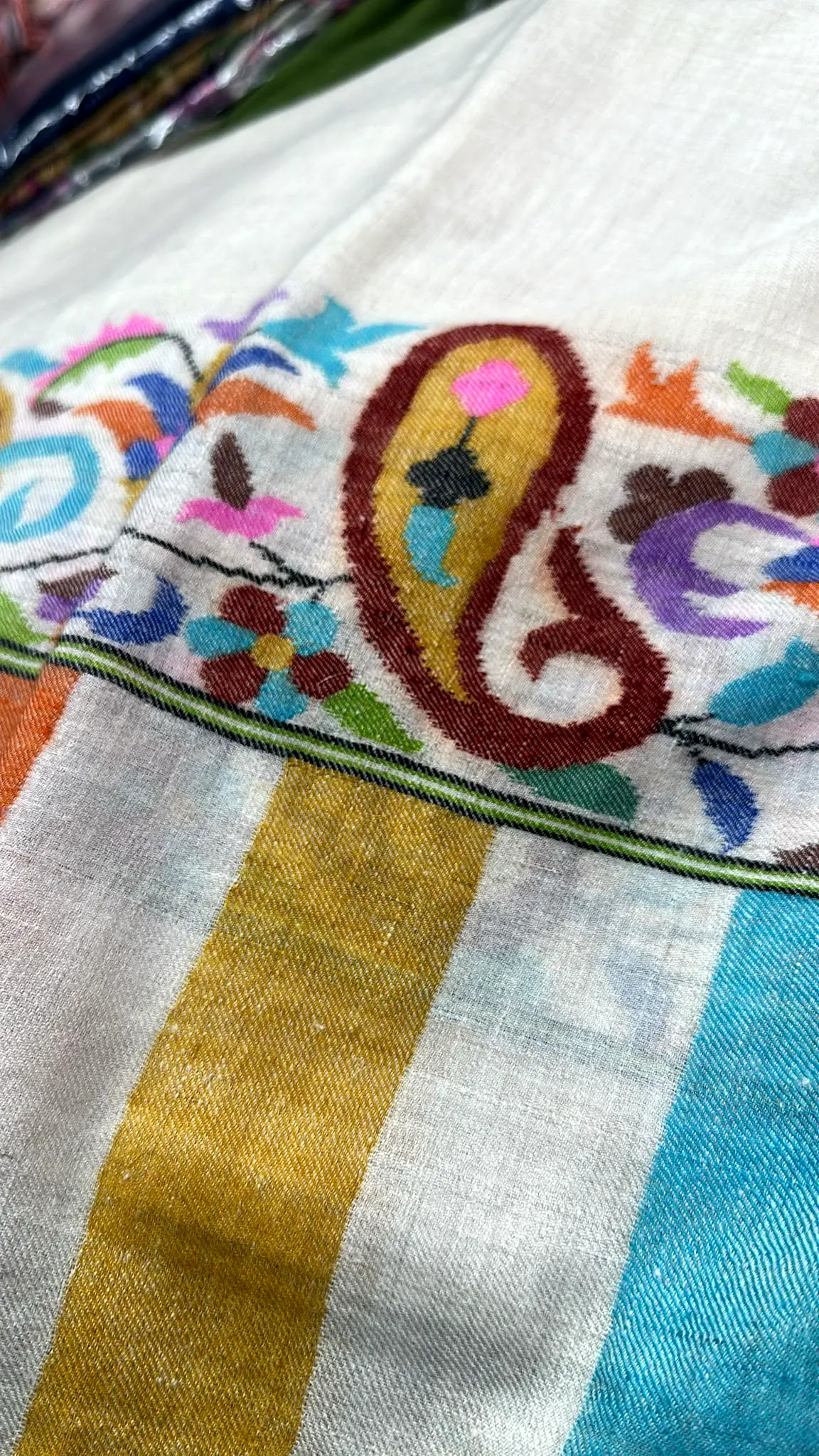
Close view of a kani paisley woven in blue, pink and green above yellow and blue stripes.

The pattern is woven into the cloth with small wooden kanis.

Kani

Kani pattern is made as the shawl is woven. Coloured wefts are carried across the loom on small wooden bobbins called kanis, while a talim, a coded pattern notation, guides the design row by row.

See the Kani collection
A navy shawl printed with a paisley outline, one corner already filled in with coloured needlework.

Fine needlework added by hand after the cloth is woven.

Sozni

Sozni uses a fine needle and separate thread to build pattern on woven pashmina. The design is printed onto the cloth first, then filled stitch by stitch, from a few sprigs to vines that cover the whole shawl.

See the Sozni collection
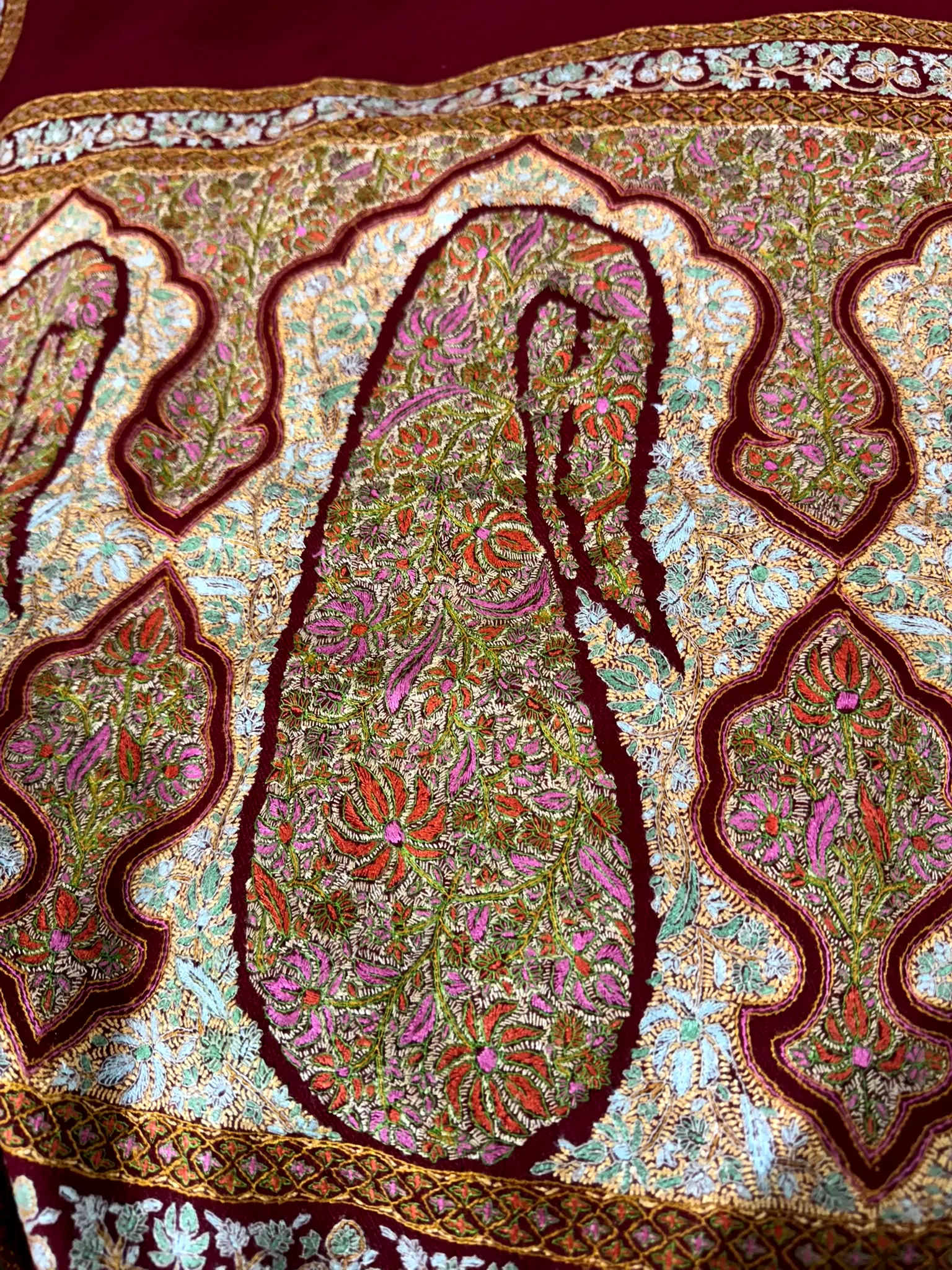
Close view of a maroon shawl with a large paisley filled with fine multicoloured needlework.

Pattern that covers the whole body of the shawl.

Jama

Jama pieces carry their pattern across the whole cloth rather than at the borders. The richest are embroidered edge to edge in the jamawar manner; others are woven all over in blocks, stripes and ikat.

See the Jama collection
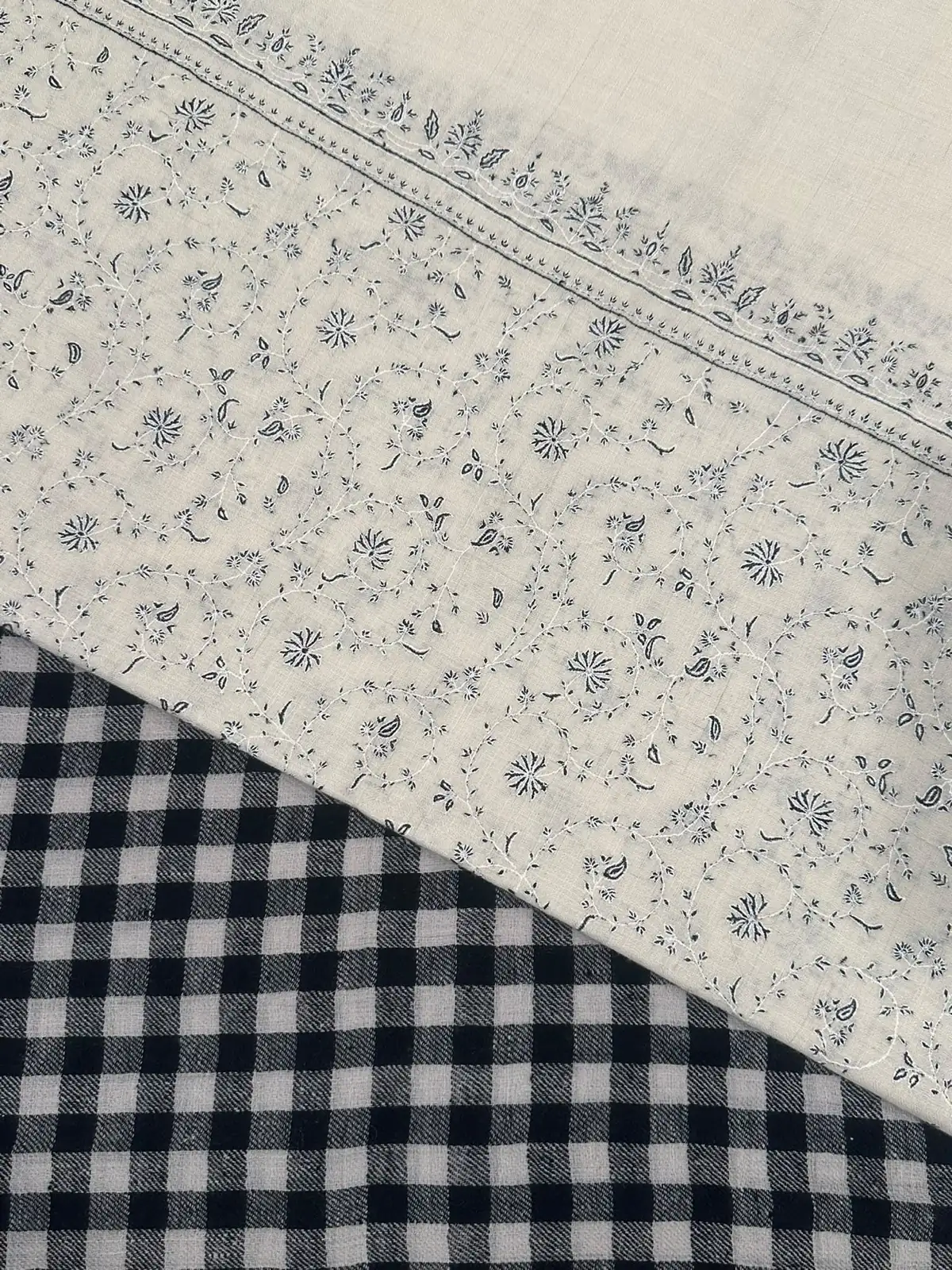
Ivory stole with grey sozni sprigs above a navy and white check stole.

The fine pashm fibre itself, woven plain or patterned.

Pashmina

Pashmina names the fine pashm fibre and the cloth made from it. Fibre is separate from technique: pashmina may be woven plain, in checks and stripes, as Kani, or embroidered with sozni.

See the Stole Assortments collection

Glossary

pashm
Fine undercoat fibre gathered from pashmina-producing goats.
kani
Lowercase kani names the small wooden bobbin tool used to carry coloured weft; uppercase Kani names the tapestry-weaving tradition.
talim
A coded pattern notation used to guide Kani weaving.
yinder
A hand-operated spinning wheel used to draw pashm into yarn.
Sozni
Sozni, also rendered Sozani in the Ministry source, is fine surface embroidery worked with a needle on woven cloth.
jama
Pattern that covers the whole body of a shawl rather than sitting at the borders.
boteh
A curved plant form often rendered as a tapering leaf or cone.
purzgar
A specialist associated with cleaning and finishing a woven surface.