A visual introduction to Kashmir and its shawl traditions.
Place comes first. Then fibre, hands, tools, time, and the finished shawl.
Srinagar, Kashmir
Chapter 1 of 4
The Valley
Kashmir sits between high mountain ranges, where winter arrives early and water shapes daily life. Srinagar grew around the Jhelum River and Dal Lake, close to trading routes that connected the valley with Central Asia, the high plateau, and the plains of India.
The city became a meeting place for many exacting arts. Papier-mâché painters build colour in fine layers. Carpet makers knot complex fields from memory and pattern maps. Walnut carvers read grain before cutting. Shawl makers brought the same patience to fibre, thread, loom, and needle.
Pashmina begins farther east, where Changthangi goats grow a soft winter undercoat against the cold. The raw fibre reaches Kashmir before specialists clean it, spin it on the yinder, dye the yarn, weave the cloth, and finish its surface by hand.
Chapter 2 of 4
Many Hands
A Kashmiri shawl brings together work that is often divided among specialists. Fibre sorting, spinning, dyeing, weaving, embroidery, washing, and finishing each depend on distinct tools and habits of attention.
Looking closely means moving beyond a finished surface. Material, technique, and time are useful starting points, while the reverse of the cloth, its joins, and its finish can reveal further evidence of how the work was made.
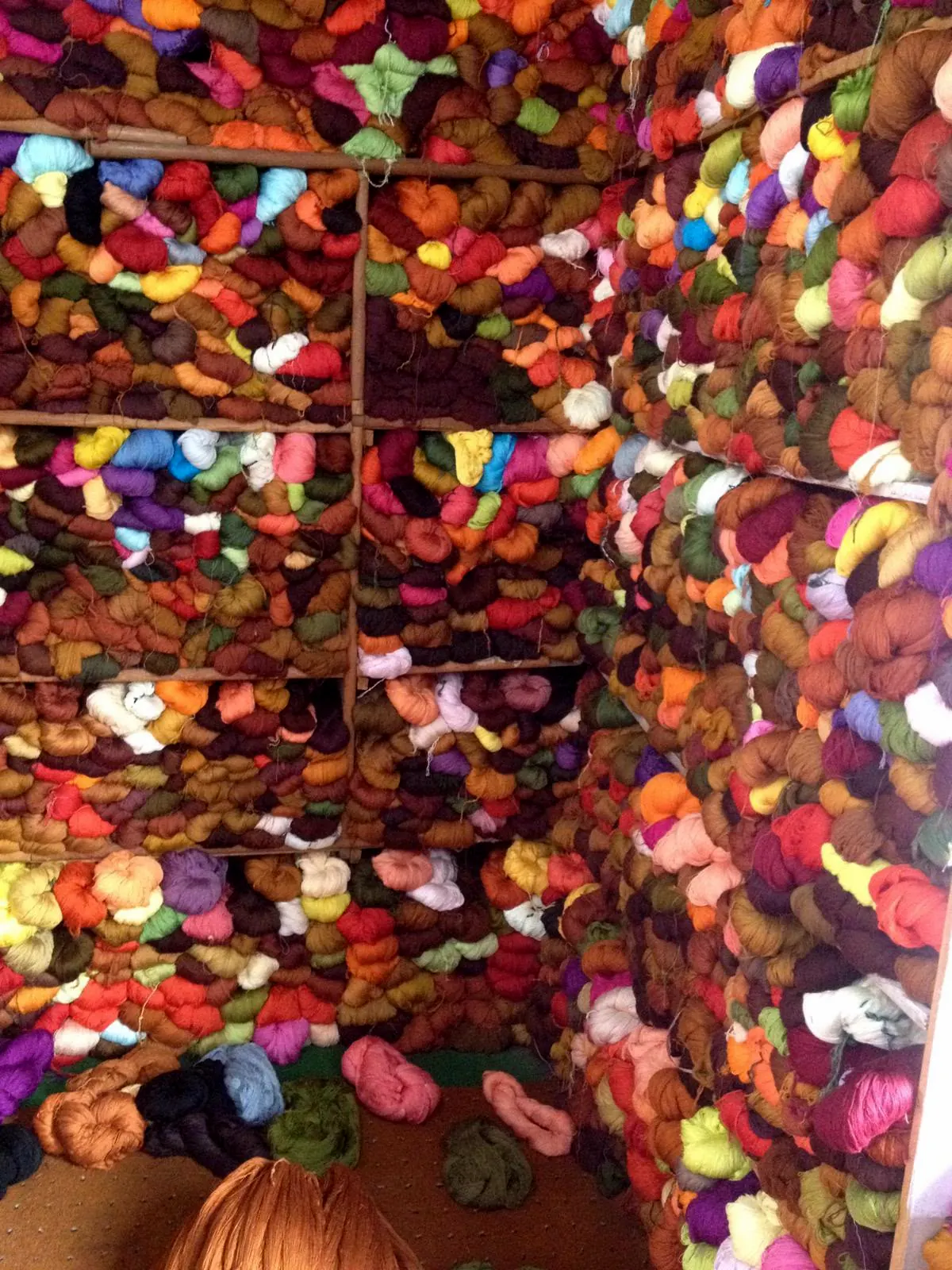
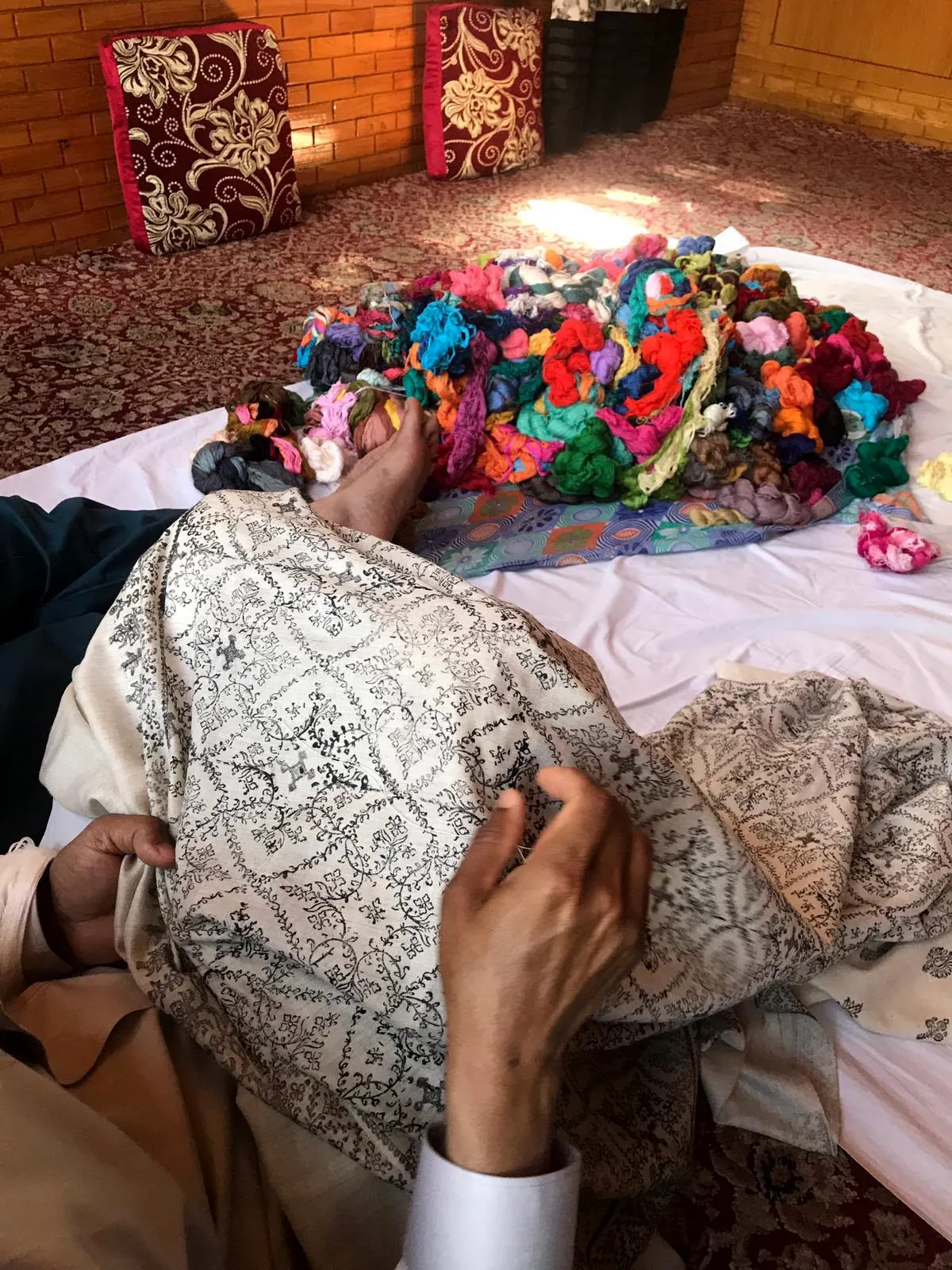
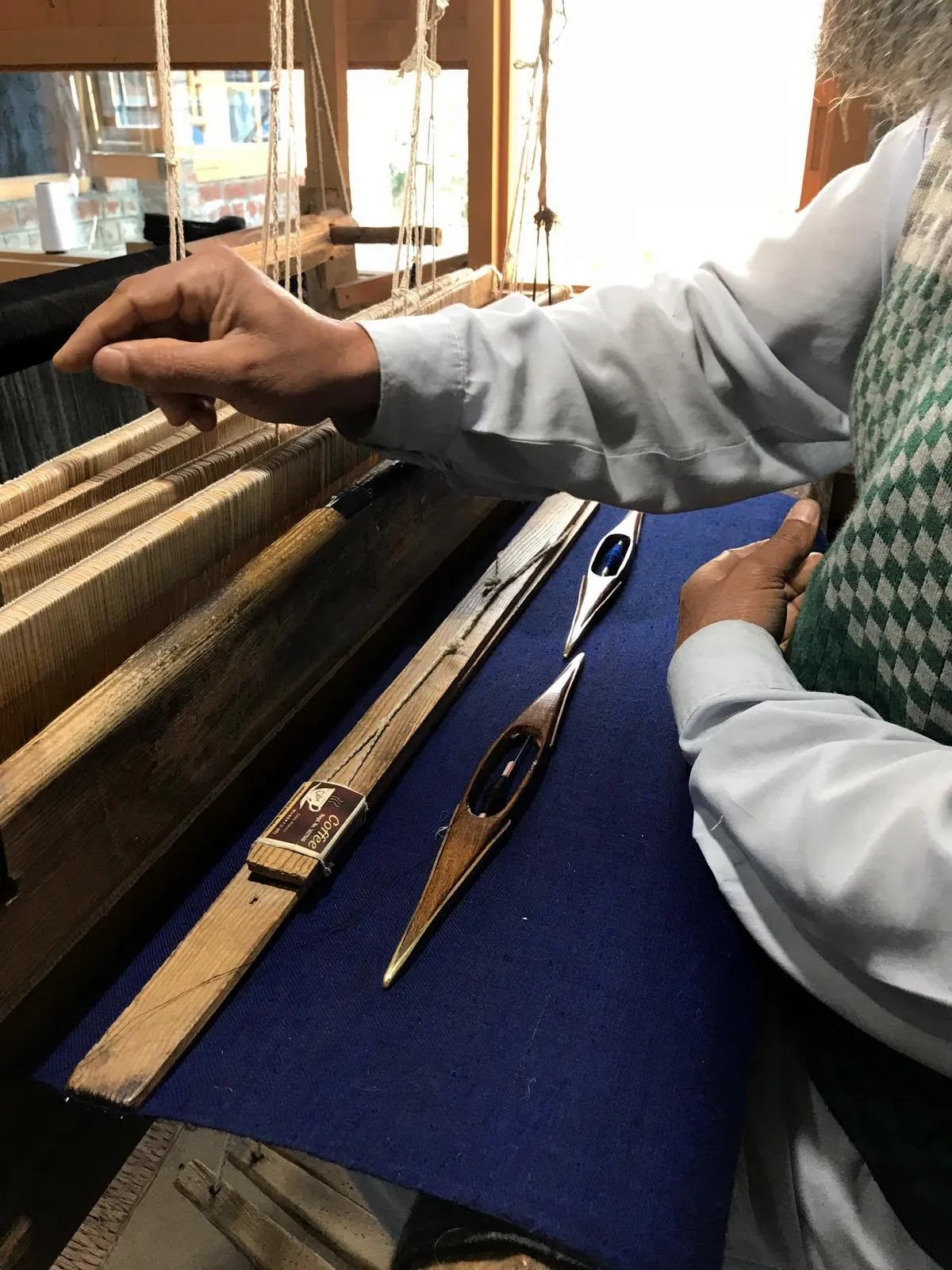
The photographs here show that work as it happens: hands filling a printed pattern with thread, a weaver at the loom, shelves of dyed yarn waiting to be used.
Chapter 3 of 4
Learning the Work
Skill is passed on at the embroidery frame and the loom, and every maker's path is a little different.
The work is learned through touch as well as language. Spinners feel twist in a fine thread, weavers feel tension across a loom, and embroiderers judge direction and spacing stitch by stitch.
Each tradition asks a viewer to slow down in a different way. A woven pattern can be read through its structure, while embroidery asks attention to the relationship between the face and reverse of the cloth.
Chapter 4 of 4
What We Carry Forward
To carry this work forward is not to freeze it in the past. It is to protect the conditions that make careful work possible: sound fibre, patient hands, fair time, and attention to how a textile is made.
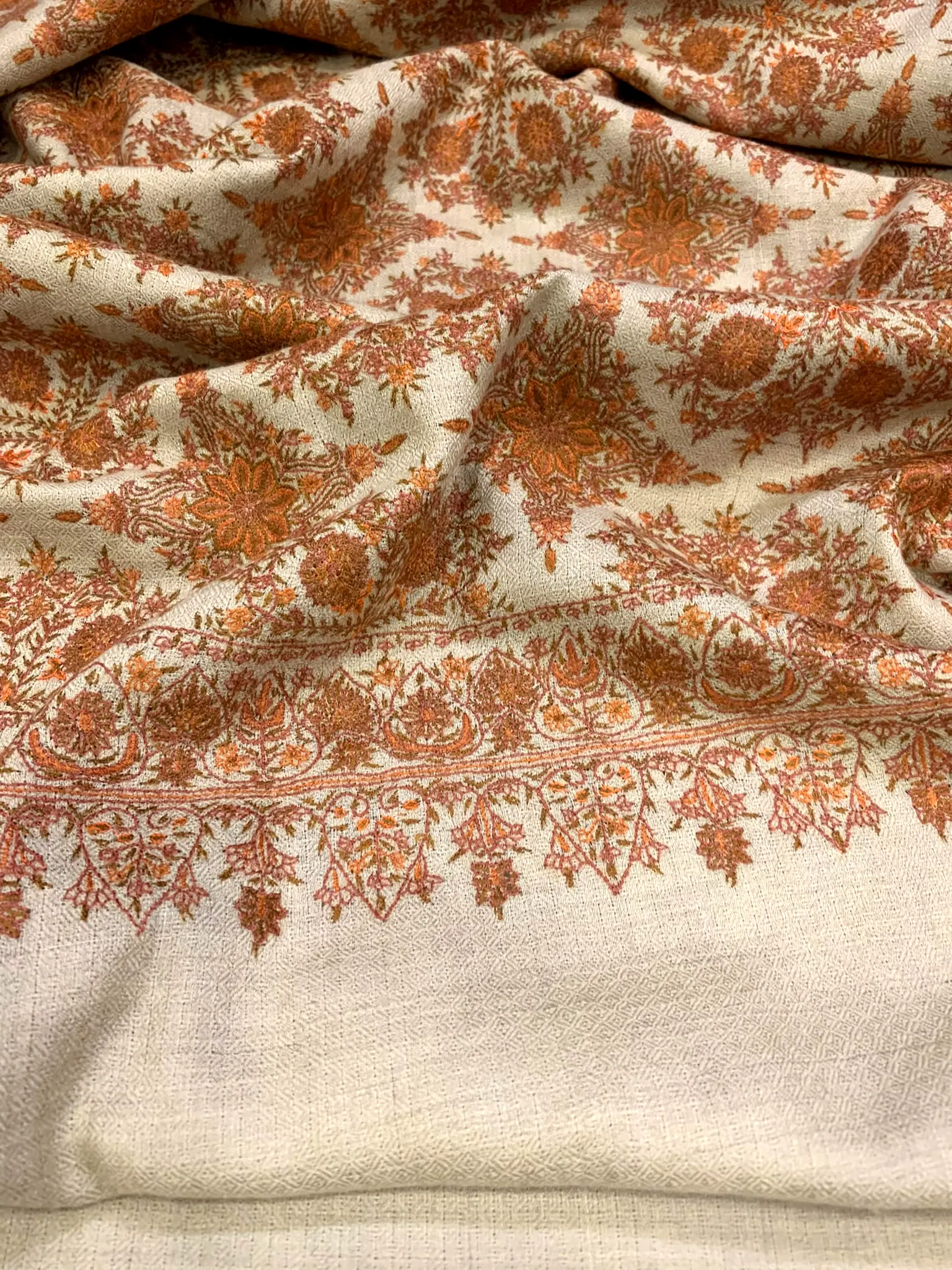
A good shawl rewards a close look. Pattern should hold together at a distance and reveal small decisions up close, and the reverse, joins, and finish show the care that went into it.
Begin with how a shawl is made, then look through the collection: Kani, Sozni, Jama, Tilla and pashmina stoles.